Spotlight Robust Global Research
Surface rigorously evaluated FLN evidence — RCTs, effect sizes and cost-effectiveness data — from every region, so decisions rest on proof rather than preference.
Policy is in Place. Now Pedagogy.
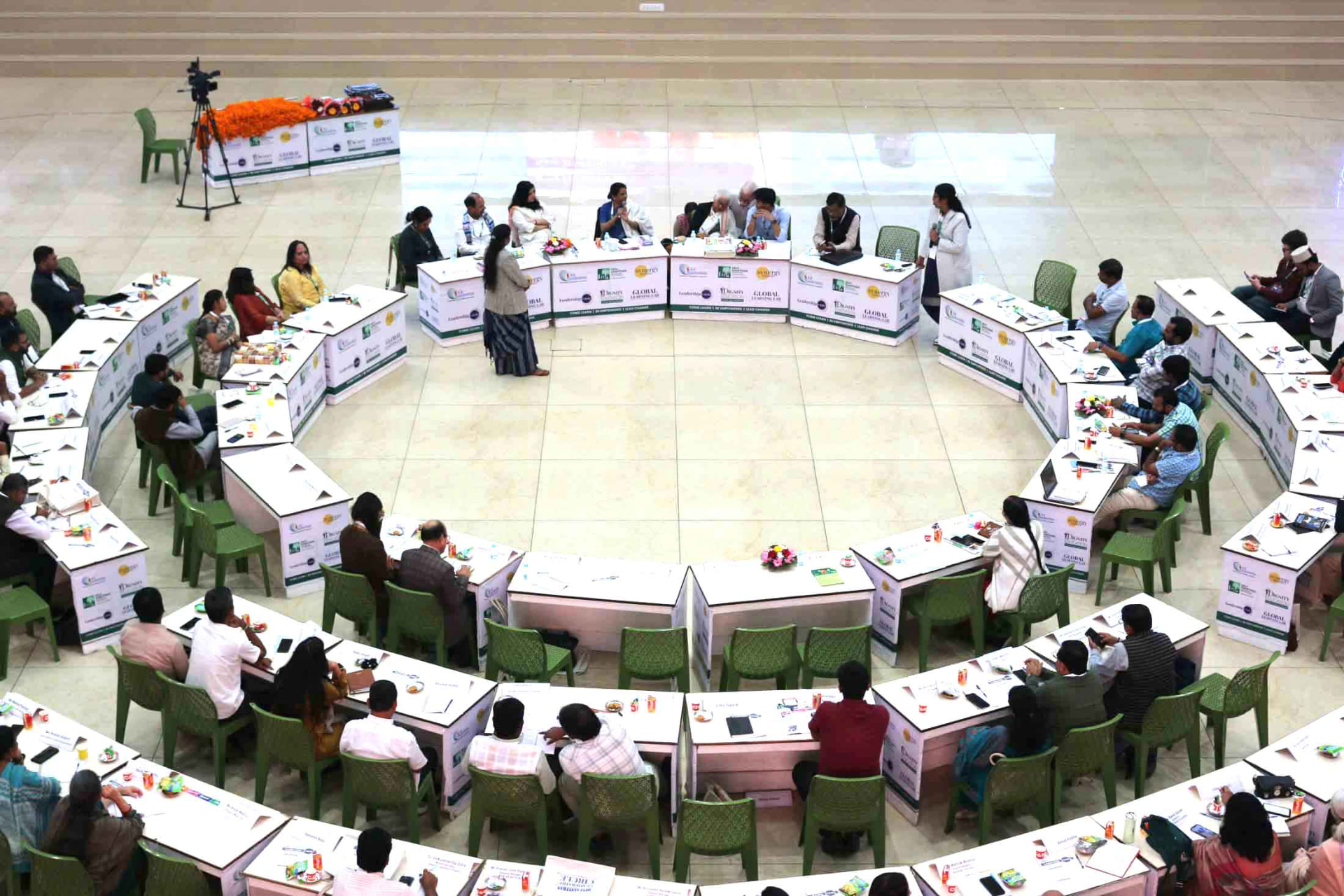
A three-day global summit bringing policymakers, researchers, NGOs, the wider community, and funding partners together to exponentially advance foundational learning while making education more inclusive, holistic, and centered on the whole child.
8–10 February 2027Lucknow, India
Countdown to the Lab
An initiative of
Dignity Education Vision International
Hosted by
City Montessori School, Lucknow — the world's largest school by enrolment
Education ecosystem
Global Education & Training Institute — associated education partner
Start here
Choose your role and we'll point you to the themes, case study and next step that actually match your work.
Concept note
The Global Learning Lab 2027 brings ministers, policymakers, NGOs, researchers and funders together for three days in Lucknow to scale what demonstrably works in foundational literacy and numeracy — anchored by Rapid Results Initiatives that deliver measurable classroom change before the summit even begins.
Surface rigorously evaluated FLN evidence — RCTs, effect sizes and cost-effectiveness data — from every region, so decisions rest on proof rather than preference.
Move past diagnosis. Every session ends with something a ministry, district or NGO can put into a classroom within one term.
Build working partnerships between ministries, universities, funders and implementers that outlast the three days.
Codify what makes an FLN programme scale affordably — materials, teacher roles, assessment and governance.
Three days
Each day moves from evidence to practice to commitments. The full session list and the agenda builder live on the programme page.
Day 1
Evidence & Ambition
Day 2
Pedagogy in Practice
Day 3
Scale & Commitments
Open the complete agenda to see session details, speakers, and save your own programme.
See the full programmeProgramme
Five threads run across the three days. Select one to see the sub-topics it covers.
Charting a Future Roadmap for Education
School-Based Rapid Results Initiatives
Community-Driven Rapid Results Innovations
Government-Led Rapid Results Initiatives
Best Practices Grounded in Research and Evidence
Embedding 21st Century Skills, Climate Education and Social-Emotional Learning
Leveraging Education Technology and AI
Gamification and Interactive Learning
Culturally Responsive Pedagogies
Context
The capital of Uttar Pradesh — a state of 240 million people running one of the world's largest FLN accelerations. Delegates can step out of a plenary and into a live government classroom the same week. Lucknow is also a city of famed hospitality, culture and cuisine.
Dignity Education has spent two decades building and testing the ALfA pedagogy from 20 pilot schools to over 30,000 government schools across 12 countries, at roughly $4 per child, with independent validation from Harvard GSE.
CMS is the world's largest school by enrolment (Guinness World Record) and has hosted the Conferences of Chief Justices of the World for decades. It offers the campus, the logistics and the convening credibility a summit of this scale requires.
Before the summit
Ministries of Education, NGOs and partner organisations working with governments at local, regional or national level are eligible to run an RRI and present results at the Lab.
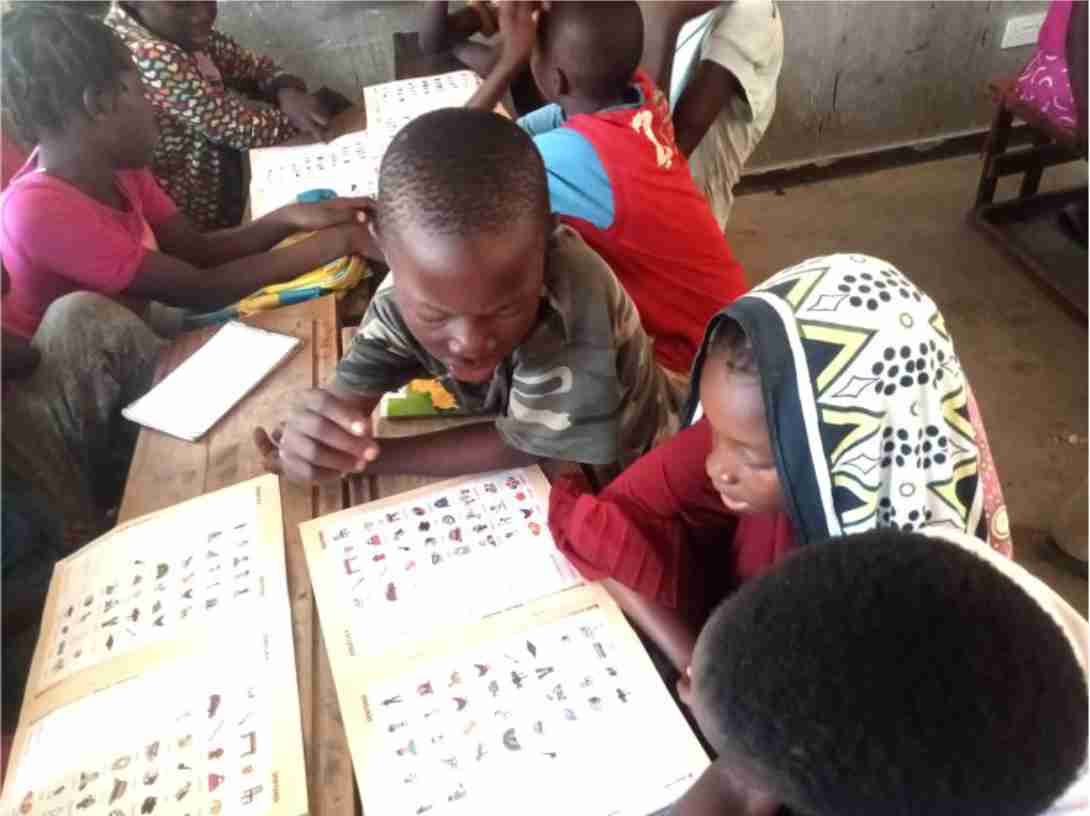
In the field
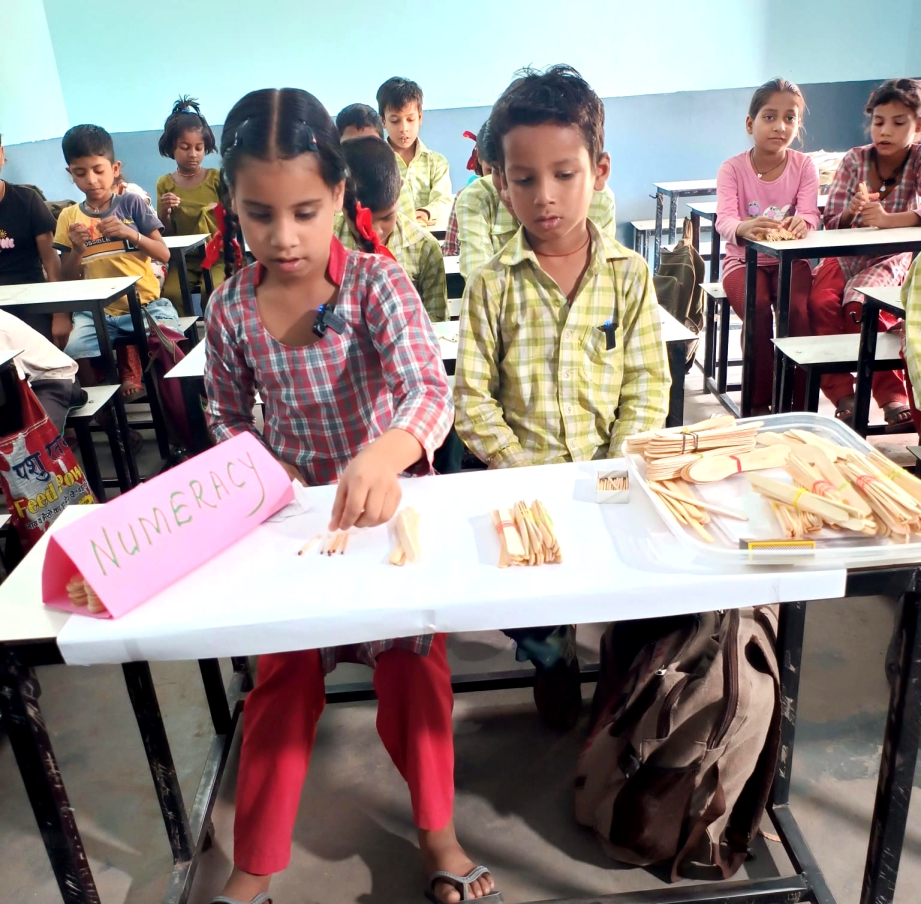
RRIs run in real government and community classrooms — like this ALfA literacy class in a partner programme — with results measured against a baseline and presented at the Lab.
A ministry, NGO or partner selects a cluster of schools and commits to a short, measured implementation with a named owner.
Teachers are trained in 2–3 days, materials are printed locally, and paired learning starts within the same term.
Results are measured against a baseline, published, and used to argue for district- or state-level adoption.
Where ALfA is running — select a pin
The pedagogy
A paired-learning method that takes children from concrete experience to abstract symbol — designed for large classes, low budgets and ordinary teachers.
Government schools using ALfA
from 20 pilot schools
Countries implementing ALfA
Average effect size
Cost per child
Toolkit languages
How it works
Children begin with objects, gestures and lived meaning before symbols. Decoding and comprehension are built together rather than sequenced years apart.
Independent validation
Prof. Fernando Reimers and colleagues published randomised trial results for ALfA in Rebuilding Education Systems After the Covid-19 Pandemic. After 40 days in Shamli, Uttar Pradesh, effect sizes were 0.23 SD in Grade 3 and 0.89 SD in Grade 5. Shamli rose to rank 18 of 75 districts in Uttar Pradesh's FLN test, and the method expanded to 41% of the district's schools.
View the bookEvidence
Published cost and effect-size ranges, side by side — then an estimator you can take into a budget conversation.
| ALfA | Structured Pedagogy | TaRL | |
|---|---|---|---|
| Core approach | Paired learning, concrete to abstract, meaning first | Scripted lessons, prescribed materials, coaching | Grouping by level, targeted remedial instruction |
| Holistic & social development | Built in — collaboration, communication, agency | Limited — focused on literacy outcomes | Limited — focused on catch-up basics |
| Speed & efficacy | Reading with meaning in weeks (40–60 days typical) | One to three school years | One to two school years, campaign-based |
| Cost per child | $4 | $8 | $20 – 27 |
| Effect size range | 0.23 – 0.89 SD | 0.10 – 0.35 SD | 0.15 – 0.70 SD |
Sources: Copenhagen Consensus (2023) and Harvard GSE (2023).
Enter the number of children you plan to reach.
Projected effect size 0.23 – 0.89 SD · $4 per child
Projected effect size 0.10 – 0.35 SD · $8 per child
Projected effect size 0.15 – 0.70 SD · $20 – 27 per child
Illustrative estimate based on published per-child costs and effect-size ranges — not a quotation or a guarantee of results. Copenhagen Consensus · Harvard GSE
“We have written the policies. What our children are waiting for is a method that works in a classroom of sixty, with the teacher we already have.”
From the classroom
“I started with 22 children, many of whom had some challenges with reading and mathematics. 19 children can now read fluently, and the rest are in process. I feel delighted with everything I have been observing in my children.”
“In 4th grade, we had so many kids who couldn't write or read. My own daughter's reading ability is now getting better each day, her scores improved significantly. Our school is excited, and our growth is accelerating. Everybody is praising the curriculum.”
“This is a very easy technique. I think this technique should be used everywhere throughout India.”
“This is an excellent method. When children use concrete objects, the learning sticks in their brain.”
What partners receive
Everything a district needs to start — printable, translatable and costed for public systems.
Low cost, low carbon, low psychological burden.
Supplements learning on devices at home and school.
Locally available, sustainable, reusable.
Highly participatory, online or offline.
Simple visual instructions and a video repository.
A scanning app enables instant analysis and reports.
Collaboration
Ministries, foundations and networks working with us on Rapid Results Initiatives and evidence.
 Coalition partner
8–10 February 2027 · Lucknow, India. Delegate places are reviewed and confirmed by the organising team.